The Legal Genius AI

Blog

Your blog category

Blog

Perceived Corruption in India’s Justice System: Causes, Delays, and Trust Issues

Introduction Perceived corruption in India’s justice system is becoming a growing concern. Many people now question fairness, speed, and transparency. This shift in public opinion is not sudden. It has developed over time due to repeated delays, complex processes, and visible differences in how cases move forward. The issue is not only about actual corruption. It is about how people perceive the system. And perception plays a major role in shaping trust. What Is Perceived Corruption in the Justice System? Perceived corruption in India’s justice system refers to the belief that legal outcomes may be influenced by power, money, or status. Even without direct proof, repeated experiences and public discussions can strengthen this belief. Many people feel that: This perception creates doubt about fairness. Judicial Delays and Their Impact Judicial delays in India are one of the biggest reasons for low trust. Cases often take years to resolve. In some situations, they extend over decades. Common examples include: When people do not receive timely justice, they begin to lose faith in the system. Selective Justice and Unequal Treatment Selective justice is another major concern. Many believe that high-profile cases move faster than regular cases. This creates a perception that: Even if the system follows due process, the difference in speed creates doubt in the minds of people. Complex Legal Processes and Accessibility Issues The complexity of legal procedures also affects trust. Many people find it difficult to understand legal terms and steps involved in a case. This leads to: A system that is hard to understand often feels less trustworthy. How Perceived Corruption Affects Public Trust Perceived corruption in India’s justice system directly impacts public trust. When people believe the system is biased or slow, they react in different ways: This weakens the overall effectiveness of the justice system. Why This Is a Growing Concern The lack of trust in the justice system is not just a legal issue. It affects society as a whole. A system that is not trusted cannot function effectively. Public confidence is essential for maintaining law and order. If trust continues to decline, it can create long-term challenges for governance and accountability. Conclusion Perceived corruption in India’s justice system, along with delays and selective justice, is a serious concern. The issue goes beyond individual cases. It reflects a wider gap between public expectations and actual experience. Addressing this gap is important for restoring confidence and ensuring that the justice system serves its purpose effectively.
Blog

India’s Case Backlog Crisis: How LegalTech Can Reduce Court Delays

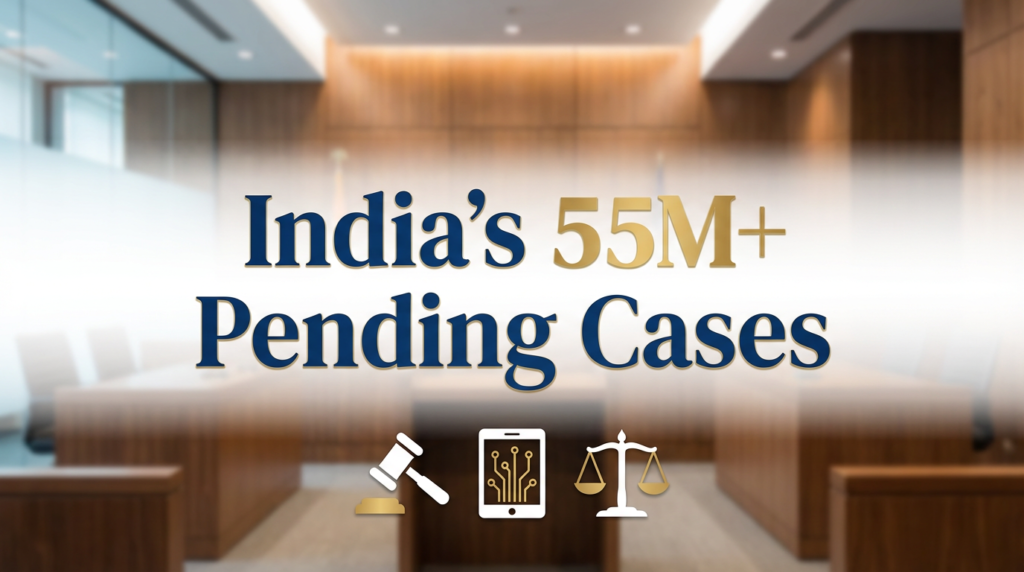
Introduction India is facing a major case backlog crisis. Today, more than 55 million cases are pending across courts. A large share of these cases is stuck in district courts, where delays are the highest. In addition, over 8.2 million cheque bounce cases continue to burden the system. This growing case backlog in India is not just a legal issue. It affects businesses, families, and individuals who are waiting for justice. When cases take years to resolve, trust in the system starts to weaken. The Scale of Case Backlog in India The numbers clearly show the seriousness of the problem: This level of court backlog makes it difficult for the judiciary to function efficiently. Causes of Court Delays in India There are several reasons behind the rising court delays in India: 1. Frequent Adjournments Repeated adjournments slow down case progress and increase waiting time. 2. Shortage of Judges India has a low judge-to-population ratio, which increases the workload per judge. 3. Complex Legal Procedures Manual processes and lengthy documentation add to delays. 4. High Volume of Cases Repetitive cases like cheque bounce matters take up a large share of court time. 5. Long Appeal Cycles Multiple levels of appeals extend the life of cases for years. Impact of Judicial Delays The impact of judicial delays in India is significant: The phrase “justice delayed is justice denied” becomes a reality for many. Role of LegalTech in Reducing Case Backlog LegalTech in India is emerging as a strong solution to this problem. Technology can help reduce the burden on courts in several ways: By solving issues before they reach court, LegalTech can help reduce the overall case backlog. How TheLegalGenius.ai Helps TheLegalGenius.ai is designed to simplify legal processes and improve access to justice. It offers: With faster legal support, users can avoid delays and make informed decisions. Conclusion India’s case backlog crisis is a serious challenge, but it can be managed with the right approach. While reforms in the judiciary are important, the use of LegalTech can play a key role in reducing delays. Even a small reduction in unnecessary cases can improve court efficiency and speed up justice delivery. The focus should now be on making legal help faster, simpler, and more accessible. The future of the legal system depends on how effectively we combine law with technology to ensure timely justice for all.

Blog

Missing signature charge order Supreme Court

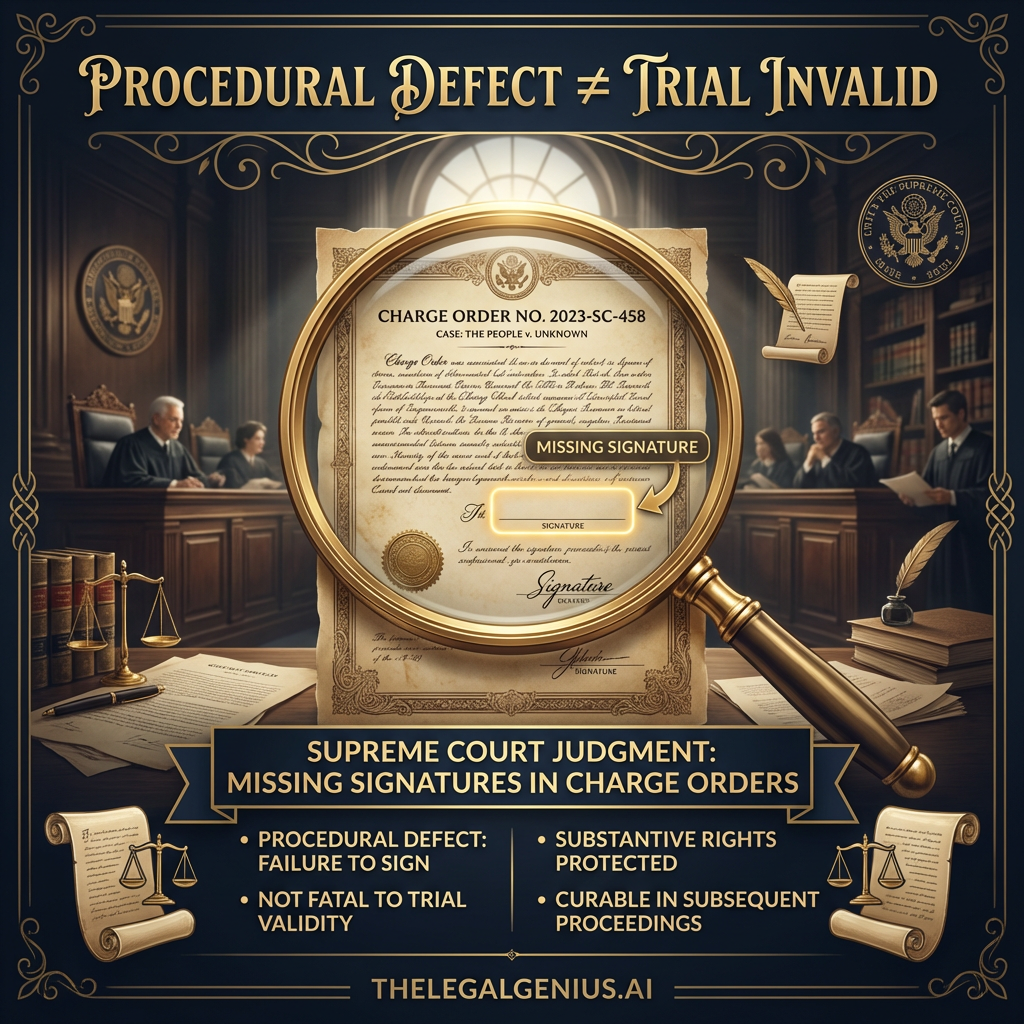
Introduction The Supreme Court of India has clarified an important issue in criminal trials. It held that a missing signature on a charge-framing order sheet is a curable procedural defect. This means the trial does not become invalid just because the judge did not sign the order. This ruling gives much-needed clarity on how courts should deal with technical errors. What is the Issue of Missing Signature in Charge Order? In many criminal cases, lawyers raise objections about unsigned documents. One common issue is the missing signature on the charge order sheet. The charge order is important because it tells the accused what charges they face. It is a key step under the Code of Criminal Procedure. However, the Supreme Court has now made it clear that a missing signature alone is not enough to cancel a trial. Supreme Court’s View on Curable Defect The Court explained that a missing signature is a procedural irregularity, not a serious legal error. It becomes important only if it affects the rights of the accused. The Court focused on one key question: 👉 Did the missing signature cause any real harm? If the answer is no, then the defect can be corrected. The trial remains valid. When Does a Missing Signature Matter? A missing signature on a charge order may matter only in certain situations: If none of these issues exist, the trial will not be affected. Why This Judgment is Important This ruling is important for the legal system. It prevents unnecessary delays in criminal trials. Earlier, small procedural mistakes were often used to challenge cases. This led to delays and retrials. Now, the Court has limited such arguments. The judgment supports a simple idea: 👉 Justice should not fail because of minor technical defects Impact on Lawyers and Legal Practice This decision changes how lawyers approach procedural errors. Now, it is not enough to point out a mistake. Lawyers must show how the mistake caused actual harm. This will lead to stronger and more meaningful legal arguments. Role of Legal Research Platforms Understanding such rulings is important for legal professionals. Platforms like TheLegalGenius.ai help users stay updated with the latest judgments. They also help in analyzing whether a defect is procedural or serious. This makes legal research faster and more effective. Conclusion The Supreme Court has made it clear that a missing signature on a charge order is not a fatal error. It is a curable defect. As long as the accused understands the charges and faces no prejudice, the trial remains valid. This ruling strengthens the idea that substance matters more than procedure. It ensures that justice is not delayed due to minor technical issues.

Blog

What is an “Industry” and Why It Matters

On March 17, 2026, the Supreme Court of India began hearing a key question—what is an “industry”? At first, this may sound simple. However, in India, this one word can affect millions of workers and businesses. A nine-judge Constitution Bench, led by Surya Kant, is deciding how the term should be understood under the Industrial Disputes Act, 1947. Therefore, the outcome of this case can change how labour laws apply across the country. Why the Definition of Industry is Important The meaning of “industry” decides who gets protection under labour laws. If an organization is treated as an industry, workers get legal rights. For example, they can raise disputes, ask for fair wages, and demand better working conditions. On the other hand, if an organization is not considered an industry, these protections may not apply. As a result, many workers may be left without support or legal remedies. The Balance Between Workers and Businesses This is why the case matters so much. A broader definition can include more organizations. In that case, more workers will receive legal protection. This can improve job security and working conditions. However, a narrower definition can reduce the burden on businesses. It can make compliance easier and help companies operate smoothly. So, the Court must find a balance. It needs to protect workers while also supporting business growth. Why This Issue Has Been Confusing Over the years, courts have given different views on what counts as an industry. Some decisions expanded the meaning, while others tried to limit it. Because of this, there is still confusion in the law. At the same time, the economy has changed. Today, many people work in services, startups, and digital platforms. These new types of work were not common when the law was first created. Therefore, old definitions may not fit today’s reality. How This Decision Can Impact the Future This hearing can bring clarity. It can set a clear rule for the future. As a result, both workers and businesses will better understand their rights and duties. The decision will affect many sectors. For instance, it can change how companies manage employees. It can also affect how workers raise complaints. In addition, it may impact contracts, working conditions, and dispute resolution. For workers, this case is about fairness and protection. For businesses, it is about clarity and ease of compliance. Final Thoughs The Court is not just deciding a word. Instead, it is shaping the future of labour law in India. Its decision will influence how laws apply to modern industries and new types of work. At TheLegalGenius.ai, we believe legal updates should be simple and easy to understand. Laws like the Industrial Disputes Act affect daily work life. Therefore, people should know how these changes impact them. The case is still ongoing. However, one thing is clear. The final decision will have a long-term impact. It will define how India balances worker rights and business growth in the years to come.

Blog

Right to Die with Dignity: How the Supreme Court of India Redefined End-of-Life Justice in a Landmark 2026 Judgment

Imagine lying in a hospital bed for 13 years with no hope of recovery. This was the reality for Harish Rana and his family. They faced years of emotional pain, high medical costs, and very difficult decisions. There was no clear legal answer to guide them. This situation raises an important question. Should a person have the right to die with dignity when recovery is not possible? On March 18–19, 2026, the Supreme Court of India answered this question. In a landmark judgment, the Court allowed passive euthanasia in India. It permitted the withdrawal of life support, including medical nutrition, for a patient in a vegetative state. This decision supports the idea of the Right to Die with Dignity in India. The Court made it clear that the right to life is not only about staying alive. It is also about dignity at the end of life. The judgment is based on Article 21 of the Constitution of India. This article protects the right to life and personal liberty. Over time, courts have said this also includes the right to live with dignity. Now, it also includes dignity in death. The Court also followed the earlier case of Common Cause vs Union of India. In that case, passive euthanasia and living wills became legal in India. A living will lets a person decide future medical care if they cannot speak later. Passive euthanasia does not mean ending life actively. It means stopping treatment that only keeps a person alive without hope of recovery. This may include removing life support or stopping artificial feeding. The Court said these decisions must be made carefully. Doctors must review the case. Families must give consent. Proper legal steps must be followed. This ensures safety and prevents misuse. The Court also stressed the importance of palliative care. Patients must not suffer. They must receive care that keeps them comfortable and pain-free. This Supreme Court judgment on passive euthanasia in India gives clarity to families. Many families face such situations but feel confused and helpless. Now, they have legal support to make better decisions. At the same time, the Court warned about misuse. It said strong safeguards are necessary. Transparency and medical checks are important in every case. This decision also starts a larger conversation. It raises questions about patient rights, medical ethics, and personal choice. More people may now think about living wills and end-of-life planning. The Right to Die with Dignity in India is now clearer than before. The Supreme Court of India has shown that law can be both strong and compassionate. This judgment is not about choosing death. It is about reducing suffering. It is about giving dignity, respect, and peace at the end of life.

Blog

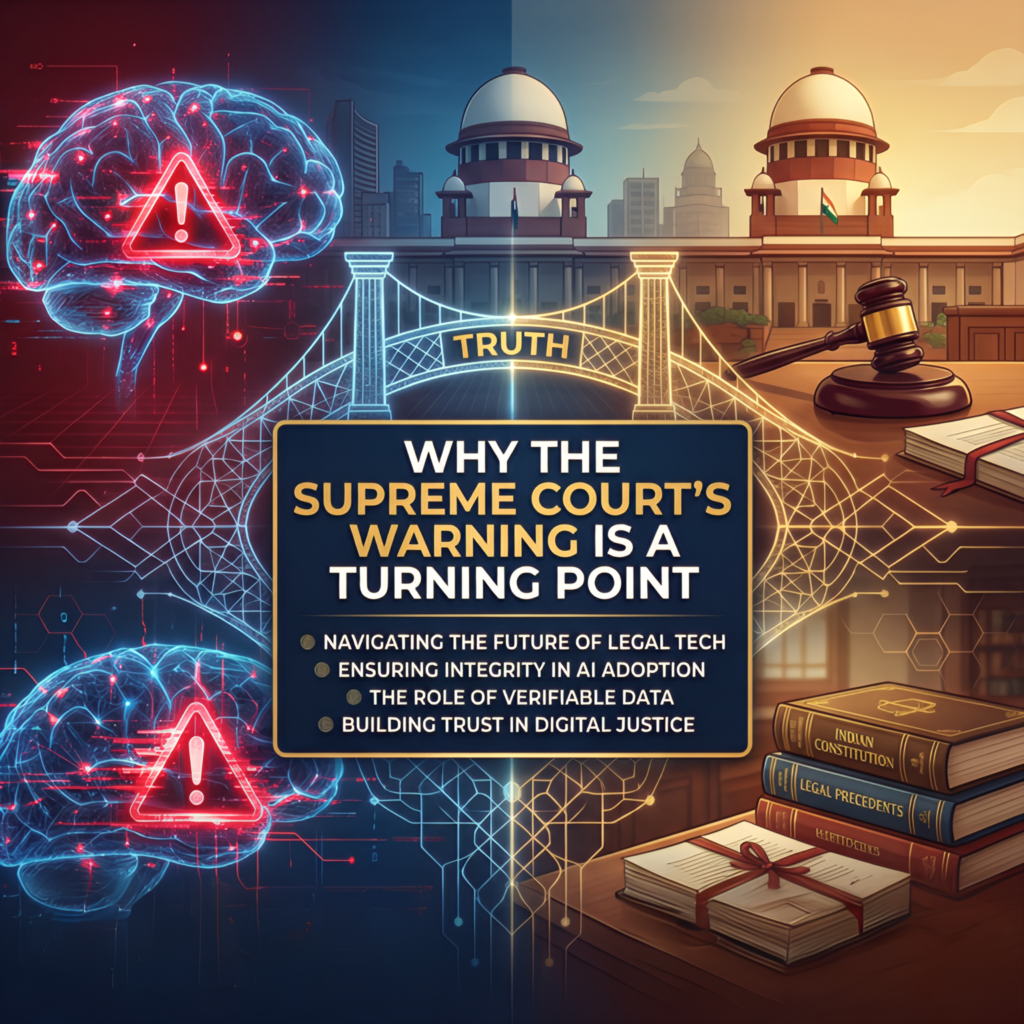
Why the Supreme Court’s Warning on “AI Misconduct” is a Turning Point for Indian Law Firms

On February 27, 2026, the Supreme Court of India issued a stark warning that has sent ripples through the legal fraternity. A Bench led by Justices P.S. Narasimha and Alok Aradhe took serious note of a Trial Court relying on fake, AI-generated judgments, declaring that such an act is not a mere “error in decision-making” but constitutes professional misconduct. As AI becomes a staple in modern law offices, this ruling marks a critical threshold: The era of “experimenting” with generic AI chatbots in legal research is over. The cost of an AI “hallucination” is no longer just a corrected draft—it is your professional license. The Rise of the “Synthetic Judgment” In the case before the Apex Court, a Trial Court in Andhra Pradesh had dismissed objections to an Advocate Commissioner’s report by citing four purported Supreme Court decisions. Upon closer inspection by the High Court, it was revealed that these judgments—complete with plausible-sounding citations—simply did not exist. They were “synthetic” results, fabricated by a generative AI tool that prioritized linguistic fluency over factual truth. Why Generic AI Fails the Bar Exam Most popular AI tools (like ChatGPT or Gemini) operate on probabilistic models. When asked for a case law, they don’t “look it up” in a database; they predict the most likely next word. In the complex world of Indian law, this leads to: The LegalGenius.ai Difference: Truth-First Architecture At LegalGenius.ai, we watched this development closely. We built our platform specifically to solve the “Hallucination” problem that the Supreme Court is now penalizing. Unlike generic chatbots, LegalGenius.ai is built on a Source-Grounded Architecture: Conclusion: Professional Responsibility Cannot Be Delegated The Supreme Court has made one thing clear: The Lawyer of Record remains solely responsible for the content of their submissions. Technology-driven research is an advantage, but it requires a professional-grade tool. The question for your firm is no longer “Should we use AI?” but “Is our AI grounded in truth?” Don’t let a “synthetic” result jeopardize a real career. Experience the precision of AI designed for the integrity of the Indian courts. Protect your practice with verified intelligence. [Start your 5-day free trial of LegalGenius.ai today]

Blog

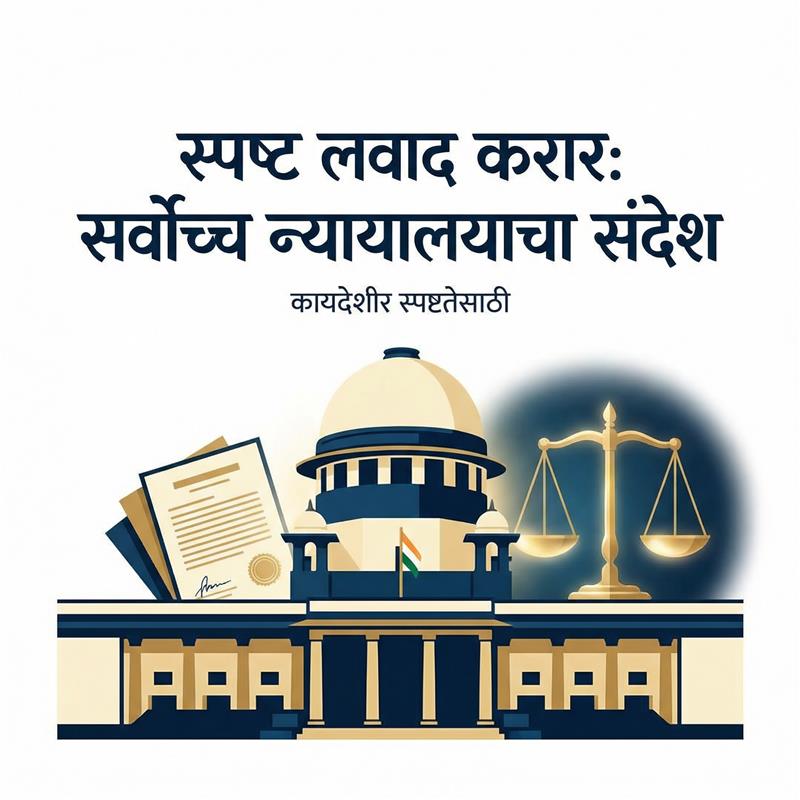
अस्पष्ट Arbitration Clause = व्यावसायिक गैरवर्तन

+सुप्रीम कोर्टाचा कडक संदेश आणि Legal-Tech ची वाढती गरज अलीकडील एका महत्त्वपूर्ण निर्णयात Supreme Court of India ने स्पष्ट शब्दांत सांगितले आहे की करारांमध्ये जाणूनबुजून किंवा निष्काळजीपणे तयार केलेले गोंधळ निर्माण करणारे, विरोधाभासी किंवा अस्पष्ट arbitration clauses हे professional misconduct ठरू शकते. न्यायालयाने अधोरेखित केले की अशा क्लॉजमुळे अनावश्यक लिटिगेशन वाढते, पक्षकारांचा वेळ आणि पैसा वाया जातो आणि न्यायालयांवर अतिरिक्त ताण निर्माण होतो. आर्बिट्रेशनचा मूलभूत उद्देश म्हणजे जलद, कार्यक्षम आणि परिणामकारक विवाद निवारण. परंतु जेव्हा arbitration clause स्वतःच अस्पष्ट असते — जसे की अधिकारक्षेत्राबाबत विरोधाभास, arbitrator नियुक्ती प्रक्रियेतील अनिश्चितता किंवा लागू कायद्याबाबत अस्पष्टता — तेव्हा तोच क्लॉज नवीन वादाचे मूळ ठरतो. परिणामी, ज्या यंत्रणेने विवाद कमी व्हायला हवेत, तीच प्रक्रिया अधिक गुंतागुंतीची बनते. Drafting ही केवळ तांत्रिक प्रक्रिया नाही — ती व्यावसायिक जबाबदारी आहे सुप्रीम कोर्टाच्या या निरीक्षणातून एक गोष्ट स्पष्ट होते: करार लेखन हे फक्त भाषा मांडण्याचे काम नाही. ते व्यावसायिक प्रामाणिकपणा, स्पष्टता आणि जबाबदारीशी जोडलेले आहे. अस्पष्ट drafting मुळे केवळ क्लायंटच नुकसान सहन करत नाही, तर वकिलांच्या व्यावसायिक आचारसंहितेवरही प्रश्नचिन्ह निर्माण होऊ शकते. आजच्या स्पर्धात्मक आणि जटिल व्यावसायिक वातावरणात, प्रत्येक clause अचूक, सुसंगत आणि वादमुक्त असणे अत्यावश्यक आहे. विशेषतः arbitration clause सारख्या संवेदनशील तरतुदींसाठी drafting मध्ये शून्य गोंधळ असणे गरजेचे आहे. Legal-Tech साठी मोठी संधी याच पार्श्वभूमीवर thelegalgenius.ai सारख्या Legal-Tech प्लॅटफॉर्मची भूमिका अधिक महत्त्वाची ठरते. आधुनिक AI-आधारित साधनांद्वारे arbitration clauses अधिक स्पष्ट आणि मानक पद्धतीने तयार करता येतात. thelegalgenius.ai खालील प्रकारे मदत करू शकते: यामुळे drafting प्रक्रियेत सुसंगतता, अचूकता आणि पारदर्शकता वाढते. मानवी निर्णय अंतिम असला तरी, AI drafting प्रक्रिया अधिक सुरक्षित आणि संरचित बनवू शकते. निष्कर्ष: जबाबदार Drafting हीच भविष्यातील गरज सुप्रीम कोर्टाचा संदेश स्पष्ट आहे — अस्पष्ट arbitration clauses ही केवळ तांत्रिक चूक नाही; ती व्यावसायिक गैरजबाबदारी ठरू शकते. वाढत्या लिटिगेशन आणि न्यायालयांवरील ताण लक्षात घेता, drafting अधिक जबाबदार आणि वादमुक्त असणे आवश्यक आहे. Legal-Tech हे replacement नाही, तर risk-reduction tool आहे. thelegalgenius.ai सारखी साधने वापरून वकिल आणि कंपन्या drafting अधिक स्पष्ट, अचूक आणि न्यायालयीन तपासणीला तोंड देण्यास सक्षम बनवू शकतात. कारण शेवटी —एक स्पष्ट clause वाद टाळते.आणि एक अस्पष्ट clause वाद निर्माण करते.

Blog

भारतीय वकिलांसाठी AI आधारित Legal Productivity Platform

भारतीय न्यायव्यवस्थेमध्ये वाढती प्रकरणे, वेळखाऊ legal research आणि मोठ्या प्रमाणावर कागदोपत्री काम ही दैनंदिन वास्तवता आहे. अशा परिस्थितीत वेग आणि अचूकता हेच वकिलांचे खरे स्पर्धात्मक सामर्थ्य ठरते. याच ठिकाणी thelegalgenius.ai एक आधुनिक AI आधारित Legal Productivity Platform म्हणून समोर येते. हे केवळ एक software नाही, तर वकिलांच्या दैनंदिन कामकाजाला अधिक स्मार्ट, अधिक संरचित आणि अधिक कार्यक्षम बनवणारे intelligent assistant आहे. 1. Legal Research – सेकंदांत स्पष्टता कोणत्याही खटल्याची सुरुवात सखोल संशोधनाने होते. संबंधित केस लॉ, precedents आणि न्यायालयीन निरीक्षणे शोधण्यासाठी अनेक तास खर्च होतात. thelegalgenius.ai वकिलांना विशिष्ट कायदेशीर मुद्द्यावर आधारित judgments आणि संदर्भ सेकंदांत उपलब्ध करून देते. यामुळे संशोधनाचा वेळ लक्षणीयरीत्या कमी होतो आणि वकिलांना strategy, argument building आणि client consultation साठी अधिक वेळ देता येतो. हे फक्त वेळ वाचवत नाही, तर तयारीची गुणवत्ता वाढवते. 2. Drafting Assistance – संरचित आणि व्यावसायिक दृष्टिकोन Notice, Petition, Agreement किंवा Written Statement तयार करताना योग्य रचना आणि अचूक भाषा अत्यंत महत्त्वाची असते. thelegalgenius.ai drafting assistance देऊन आवश्यक कायदेशीर मुद्द्यांची रूपरेषा सुचवते आणि दस्तऐवज अधिक professional बनवण्यास मदत करते. अंतिम निर्णय आणि जबाबदारी वकिलाचीच राहते, परंतु प्रक्रिया अधिक सुव्यवस्थित आणि जलद होते. यामुळे turnaround time कमी होतो आणि क्लायंट satisfaction वाढतो. 3. Document Analysis – मोठ्या कागदपत्रांचे स्मार्ट विश्लेषण Corporate contracts आणि commercial agreements अनेकदा ३०–५० पानांचे असतात. प्रत्येक clause तपासणे ही वेळखाऊ प्रक्रिया असते. thelegalgenius.ai document analysis feature वापरून महत्त्वाचे clauses, संभाव्य risk areas आणि critical terms पटकन ओळखता येतात. यामुळे review प्रक्रिया अधिक systematic आणि error-free बनते. Law firms आणि in-house legal teams साठी हे productivity multiplier ठरू शकते. 4. Workflow Productivity – Smart Legal Practice Routine research automation आणि document summarization मुळे legal workflow अधिक streamlined होते. कमी वेळेत अधिक प्रकरणे हाताळणे शक्य होते, billing efficiency सुधारते आणि स्पर्धात्मक बाजारात वेग आणि अचूकतेचा advantage मिळतो. thelegalgenius.ai हे वकिलांना “hard work” पासून “smart work” कडे नेणारे साधन आहे. AI वकिलांना replace करते का? नाही. AI न्यायालयात उभे राहत नाही, युक्तिवाद करत नाही किंवा क्लायंटशी विश्वासाचे नाते निर्माण करत नाही. पण AI वकिलांना अधिक तयार, अधिक वेगवान आणि अधिक confident बनवते. thelegalgenius.ai हे replacement नाही — ते empowerment आहे. निष्कर्ष भारतीय Legal Tech ecosystem वेगाने विकसित होत आहे आणि तंत्रज्ञान स्वीकारणारे वकीलच पुढे राहतील. thelegalgenius.ai हे legal research, drafting आणि document analysis मध्ये स्पष्टता, वेग आणि कार्यक्षमता देणारे आधुनिक प्लॅटफॉर्म आहे. आजच्या स्पर्धात्मक कायदा क्षेत्रात, smart tools वापरणे ही निवड नसून गरज आहे.

Blog

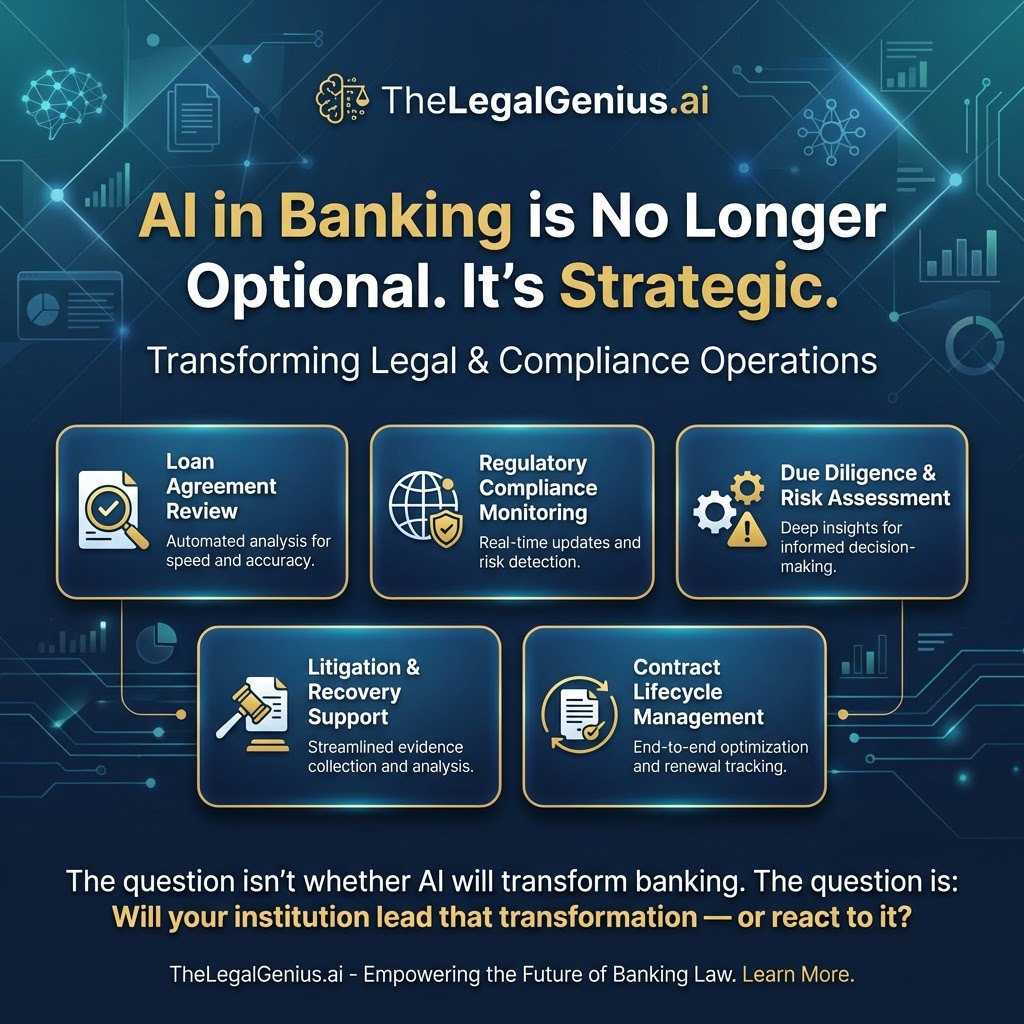
AI in Banking: Key Use Cases Transforming Legal & Compliance Operations

The adoption of AI in banking is accelerating as financial institutions look to improve efficiency, reduce risk, and strengthen compliance. With large volumes of loan agreements, regulatory updates, contracts, and litigation matters, banks need smarter systems to manage legal operations. AI-powered platforms like TheLegalGenius.ai help banks automate document review, compliance monitoring, and risk assessment — enabling faster and more accurate decision-making. Key AI Use Cases in Banks 1. Loan Agreement Review AI analyzes loan and credit documentation, flags risky clauses, and ensures regulatory alignment — reducing turnaround time and speeding up loan disbursal. 2. Regulatory Compliance Automation AI tracks regulatory updates, summarizes circulars, and helps legal teams update internal policies — improving audit readiness and reducing penalties. 3. Due Diligence & Risk Assessment AI extracts key clauses, identifies financial obligations, and highlights risk indicators — enabling smarter credit decisions. 4. Litigation & NPA Management AI summarizes case files and assists in drafting recovery notices — improving operational efficiency in legal and recovery departments. 5. Contract Lifecycle Management AI standardizes vendor and outsourcing agreements, detects deviations, and reduces contractual risk. The Strategic Advantage AI in banking does not replace legal teams — it enhances productivity. By automating repetitive legal tasks, banks can focus on strategic decision-making, risk management, and growth. As regulatory complexity increases, AI-driven legal intelligence will become essential for modern banking institutions. TheLegalGenius.ai empowers banks to operate faster, smarter, and more compliantly in a rapidly evolving financial ecosystem.

Blog

AI Replacing Lawyers in India? Complete Nonsense — Here’s Why Everyone Gets It Wrong

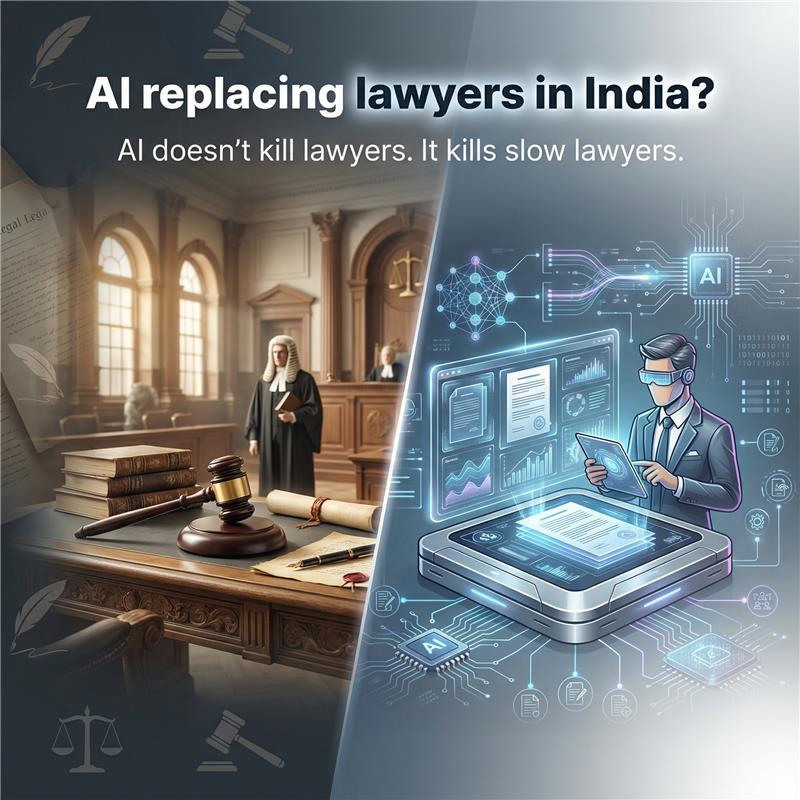
Introduction Every few months, a headline goes viral: “AI will replace lawyers.” In India, this fear spreads faster because our legal system is overwhelmed — with over 46 million pending cases, overworked courts, and law firms buried under paperwork. But here’s the truth most people miss: AI is not here to replace lawyers.AI is here to replace slow, inefficient legal work. That distinction changes everything. 1. What AI Is Really Doing in Indian Law Legal AI is no longer a future concept. It is already being used inside courtrooms, law firms, and corporate legal teams. With TheLegalGenius.ai, legal professionals can now: In practical terms, this means 60–70% of repetitive legal work disappears. Not jobs — wasted time. 2. A Real Story from the Ground In 2018, I spent three full weeks inside a Delhi law firm reviewing 12,000+ pages for an arbitration matter. The work involved: Today, TheLegalGenius.ai could do the same groundwork in 2–3 days. But here’s what matters: The case was not won because of who read faster.It was won because the senior partner: That is not data processing.That is human judgment under pressure. 3. Why AI Will Never Replace Lawyers Law is not a data problem.It is a human problem. AI can: But it cannot: Lawyers don’t win because they know more.They win because they interpret people better. And no algorithm can do that. 4. The Real Shift: From Labour to Leverage What TheLegalGenius.ai really does is remove the most expensive bottleneck in law — manual effort. Instead of: Lawyers get: This turns lawyers from labourers into strategists. One great lawyer using AI can now do the work of ten. 5. So, Is AI a Threat or a Weapon? The real future is not: Lawyers vs AI It is: Lawyers with TheLegalGenius.ai vs lawyers without it. AI won’t take your job. But a lawyer using AI absolutely will. Final Word AI kills slow law.Not great lawyers. And that’s exactly what TheLegalGenius.ai was built to do —to give modern legal professionals unfair speed, clarity, and competitive advantage.

Scroll to Top